How Does AI Work? A Simple Explanation for Beginners
 AI
AIWhat actually happens when you ask ChatGPT a question? AI explained in plain words, with everyday examples and no maths or jargon.
So, how does AI work, in simple terms? It learns patterns from huge amounts of examples, then uses those patterns to make its best guess. When ChatGPT answers you, it isn't thinking or looking anything up in a giant encyclopedia. It is predicting, one small piece at a time, which words are most likely to come next.
I use AI every single day. It helps me write code for the free tools on Blogs Byte, plan articles, and draft first versions of posts like this one. And honestly, the moment it became really useful to me was the moment I understood what it actually does under the hood. That's what this guide is about: plain English, everyday examples, no maths, so you know what AI is good at, where it fails, and how to use it without getting fooled.
AI doesn't think. It calculates
Films make AI look like a digital brain that might wake up one day with its own plans. The reality is less dramatic. Every AI tool you use today, from ChatGPT to the spam filter in your email, is doing high-speed pattern matching.
Once you see it that way, AI stops feeling like magic. It becomes what it really is: a very powerful tool that is brilliant at some jobs and surprisingly bad at others.
Normal software vs AI: the key difference
For decades, software worked like a recipe. A programmer wrote every single rule by hand:
- If the user clicks "Log in", check the password.
- If the password is correct, open the account.
- If not, show an error.
The computer only did exactly what it was told. If something happened that the programmer hadn't thought of, the software didn't know what to do.
AI flips this around:
- Normal software: data + rules written by a person = answers
- AI (machine learning): data + correct answers = rules the computer works out by itself
Take a simple example. Writing rules that describe a cat (pointy ears, whiskers, fur, four legs) is nearly impossible, because there are always exceptions. So instead, we show a computer thousands of photos labelled "cat" and thousands labelled "not a cat", and let it find the patterns that tell them apart. This learning stage is called training.
Neural networks: a mixing desk with billions of knobs
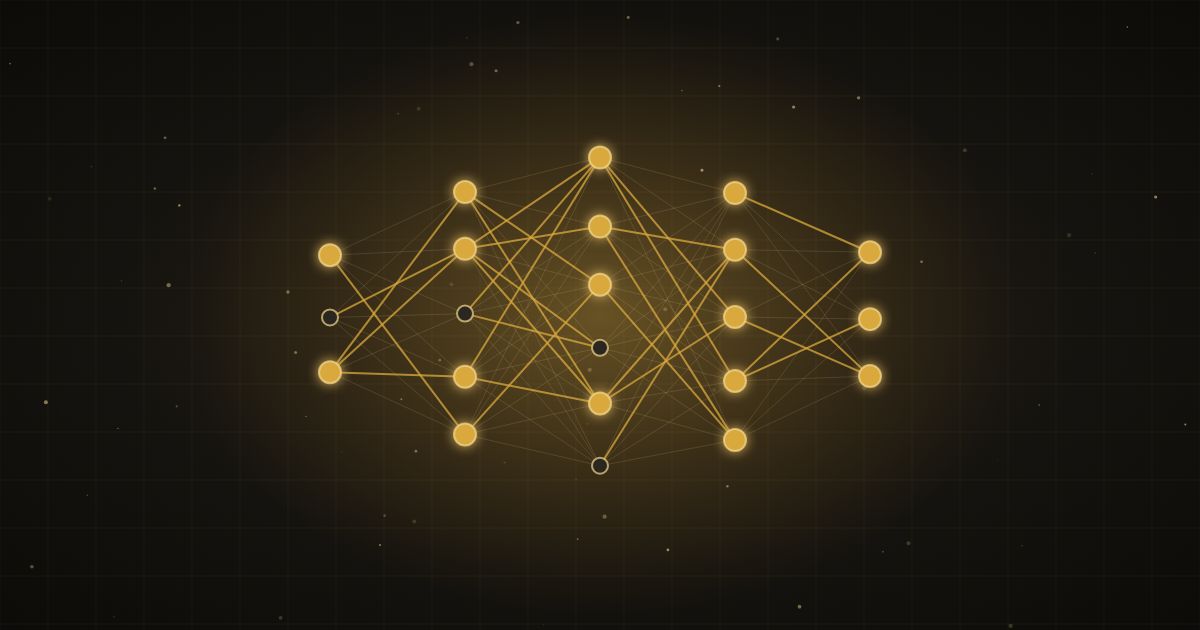
You'll often hear the term neural network. The name comes from the brain, but it is only loosely inspired by it. A better picture is a music studio's mixing desk. A normal desk has a few dozen sliders. A large AI model has billions of tiny knobs, called parameters.
Here's how those knobs get set during training:
- The blank start: At first, every knob is set at random. Show the model a photo of a dog and it might guess "toaster".
- The correction: The model is told it's wrong: "That's a dog." It nudges millions of knobs very slightly in the direction that would have given the right answer.
- The repetition: This happens again and again, billions of times, across huge collections of text, photos and code.
- The result: Eventually the knobs settle into positions where new information flows through them and comes out as a useful answer.
Nobody sets those knobs by hand. That's why even the people who build AI can't always explain exactly why a model gave a particular answer.
How ChatGPT writes its answers
When you type a question into ChatGPT, Gemini or Claude, it plays a very advanced game of autocomplete, the same idea as the word suggestions on your phone keyboard, but far more powerful.
Imagine the sentence "The cat sat on the…". You know the answer because you understand cats and furniture. The AI doesn't understand them the way you do. Based on the patterns it learned in training, it works out how likely each possible next word is. It might decide "mat" has a 42% chance, "sofa" 28% and "roof" 15%.
It picks one, adds it to the sentence, and repeats the process for the next word, and the next, until the answer is complete. (Technically it works with tokens, which are whole words or pieces of words, but the idea is the same.)
This is also why the same question can get slightly different answers each time: the AI doesn't always pick the single most likely word.
Why AI makes things up ("hallucinations")
The autocomplete idea explains AI's strangest habit. It can write a neat email in seconds, then confidently give you a fake statistic, a book that doesn't exist, or the wrong date.
AI aims for answers that sound right, not answers that are checked to be true. If a made-up fact fits the pattern of a convincing answer, the model may produce it with complete confidence. In AI, this is called a hallucination.
How to protect yourself:
- Check anything important, such as health, money, legal or exam facts, against a trusted source.
- Ask for sources, then open them yourself to confirm they exist and say what the AI claims.
- Give it the facts to work from (paste the document or details), instead of asking it to remember.
I've been caught out by this myself, more than once:
- The first draft of this very article, written with an AI assistant, used the wrong name for our own website and listed AI model versions that were already out of date. It all sounded completely convincing.
- While building our free PDF tools, an AI coding assistant confidently suggested a setting that had been removed from the library in its newest version. The code looked right, but it was based on an older pattern the AI had learned.
- When we planned articles about bank statement passwords, we noticed AI tools happily "know" the password format for almost any bank, and those formats are often made up. Now every one of them gets checked against the bank's own website before anything is published.
None of these were dramatic, but each one would have been embarrassing if I hadn't checked. This is where a lot of people go wrong. They treat AI like an all-knowing expert instead of a fast assistant whose work needs checking. We explain this, with five tools that genuinely save time, in our guide on why most people use AI wrong.
AI, machine learning and ChatGPT: what's the difference?
These words get mixed up all the time. Here's the simple version.
Artificial intelligence (AI) is the big idea: computers doing tasks that normally need human intelligence. Chess apps, spam filters and maps that reroute you around traffic are all examples.
Machine learning (ML) is a type of AI that learns patterns from data instead of following rules a person wrote by hand. Netflix and YouTube recommendations and your bank's fraud alerts work this way.
Large language models (LLMs) are machine learning models trained on huge amounts of text, so they can understand and write language. ChatGPT, Gemini, Claude and Meta AI are all built on them.
So ChatGPT is a large language model, which is a kind of machine learning, which is a kind of AI.
Where you already use AI every day
You probably use AI many times a day without noticing:
- Your phone camera sharpens faces and fixes lighting automatically.
- Your keyboard suggests the next word as you type.
- Google Maps predicts traffic and suggests a faster route.
- Your email moves spam out of your inbox.
- YouTube, TikTok and Netflix pick what to show you next.
- Your bank flags a payment that looks unusual.
All of these work the same way: they learned patterns from millions of examples and use them to make a quick guess.
My takeaway
AI isn't magic, and it isn't a living mind. It is maths, huge amounts of data and a lot of computing power, working at incredible speed.
The way I think about it now: AI is like a very fast intern who has read half the internet. Brilliant at a first draft, a summary or a quick idea. But I'd never send its work out without reading it first. Treat it like an all-knowing oracle and it will eventually let you down. Treat it like that intern, and it can genuinely save you hours every week.
FAQs
Does AI actually think like a human?
No. AI doesn't understand or feel anything. It recognises patterns in data and predicts the most likely answer. It can sound human because it learned from text written by humans.
How does AI learn from data?
During training, the AI makes a guess, is told whether it was right, and adjusts its internal settings slightly. Repeating this billions of times slowly turns random guesses into useful answers.
Why does AI make things up?
Because it predicts what sounds right rather than checking what is true. When it doesn't have reliable information, it can still produce a confident answer. Always verify important facts.
What is the difference between AI and ChatGPT?
AI is the whole field. ChatGPT is one product built on a large language model, a type of AI designed to understand and write text.
Is AI dangerous?
AI itself is a tool, but it can be misused, for example in scams that copy someone's voice, or by people trusting wrong answers without checking. Use it carefully, never share private details like passwords or ID numbers, and double-check anything important.
Writer, Blogs Byte
Daniel Brooks writes plain-English guides on AI and everyday technology for Blogs Byte, focused on what actually works for ordinary users: clear steps, honest limits and no hype.